Projects & reactors
Stories matching this combination of interests.
Sign in to follow topics, choose markets, and save your own channels.
Sign in
The Association of Southeast Asian Nations (ASEAN) faces rising electricity demand and decarbonization goals, prompting interest in Small Modular Reactors (SMRs). However, fragmented regulatory frameworks across member states pose a challenge to their deployment. Regional regulatory convergence is proposed to streamline licensing, enhance safety, and improve project bankability.
The United States Department of Commerce announced that South Korea plans to invest $120 billion in U.S. nuclear power projects. This investment is part of a larger $200 billion commitment across three projects, with a significant portion allocated to the construction of eight large nuclear reactors at federal sites.
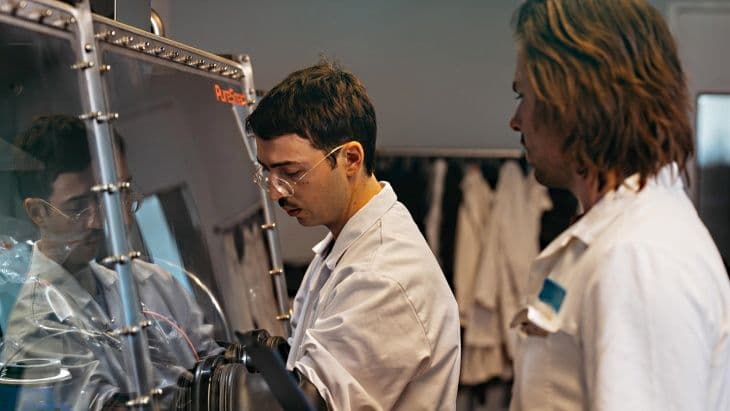
Thorizon and TNO have initiated a materials program to validate the structural integrity and operational lifespan of components within Molten Salt Reactors (MSRs). This program aims to provide data for regulatory approval and support the commercial deployment of Thorizon's MSR technology.
India aims to achieve 100 GW of nuclear energy capacity by 2047, a significant increase from its current 8.8 GW. This expansion relies heavily on the deployment of indigenously developed Bharat Small Modular Reactors (BSMRs) in decentralized industrial settings. However, the ambitious goal faces substantial institutional, regulatory, and human resource challenges.
Bluecore Energy has announced significant progress in the development of its 10 MW pressurized water reactor (PWR) for maritime applications. Key milestones include the purchase of low-enriched uranium, ongoing engagement with U.S. regulatory bodies, and advancement in its maritime classification pathway.
Illinois has set a goal to add 2 GW of new nuclear capacity by 2033, following the lifting of restrictions on new reactor construction. The state currently operates 11 commercial reactors, representing the largest nuclear capacity in the United States.
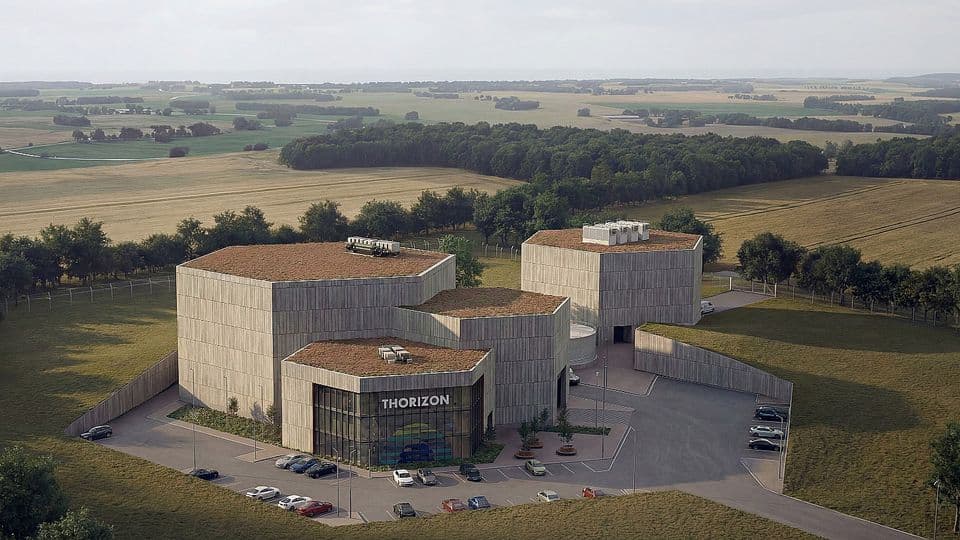
Thorizon and Urenco have announced a collaboration to develop the fuel cycle for molten salt reactors (MSRs). The partnership will focus on exploring enrichment services, Urenco's role in the molten salt fuel supply chain, and methods to enhance uranium utilization.
ABB and Rolls-Royce SMR have signed a Memorandum of Understanding to collaborate on small modular reactor (SMR) technology. The partnership aims to deliver low-carbon electricity globally, reduce project risks, and enhance delivery certainty for SMR projects.
The nuclear industry faces challenges in capital and supply chain readiness, influenced by past project overruns and bankruptcies. This has led to increased caution among engineering, procurement, and construction (EPC) firms when bidding on new reactor projects.

ŠKODA JS has secured a contract to supply control rod drive mechanisms for Rolls-Royce SMR's 470 MWe small modular reactors. This agreement follows earlier pre-production work for key components and highlights the formation of a global supply chain for SMR technology.
Kairos Power and Samsung C&T Engineering and Construction Group have signed a binding term sheet to collaborate on Kairos's Hermes 2 demonstration plant. The agreement includes a financial commitment of up to $100 million from Samsung C&T, combining direct investment and in-kind engineering services. Samsung C&T has also joined Kairos's engineering, procurement, and construction (EPC) team to support the Hermes 2 project and future reactor technology deployments.
India aims to expand its nuclear power capacity to 100 GW by 2047, requiring an estimated $210 billion investment. Officials and industry executives highlight the need to review green finance rules, which currently exclude nuclear investments, and to develop a stronger talent pipeline. Efforts are underway to address the shortage of specialized education and training, including certification programs to build a local nuclear supply chain.
The MARVEL microreactor project has reached significant milestones, including the delivery of its primary coolant system and federal safety approval, as it prepares for initial startup tests.

The United States Trade and Development Agency (USTDA) has signed an agreement with Thailand's Electricity Generating Authority of Thailand (EGAT) to fund a feasibility study for small modular reactor (SMR) deployment. The study will assess potential locations, costs, and regulatory requirements for SMR technologies capable of generating approximately 600 MWe. This initiative aims to support Thailand's long-term power development strategy and enhance energy security.

The nuclear energy sector is undergoing a significant re-evaluation of reactor technologies, fuels, sizes, and applications, driven by increasing electricity demand from emerging technologies. This re-examination is attracting substantial investment and commercial interest in diverse reactor concepts, including advanced fission and fusion designs.
National Thermal Power Corporation Limited (NTPC) is conducting feasibility studies for a 3,200 MW nuclear power project in Odisha, India. Two sites, Deogarh and Nabarangpur, are under assessment after initial evaluations deemed two other locations unsuitable. This initiative is a partnership with Nuclear Power Corporation of India Ltd (NPCIL).

The European Investment Bank (EIB) has announced its first investment in small modular reactor (SMR) technology, providing a convertible loan to Steady Energy. This funding will support Steady Energy's research and development, testing, and licensing activities for its LDR-50 SMR, a heat-only reactor designed for district heating and industrial applications. The investment aligns with the European Commission's goal to deploy SMRs by the early 2030s.
The governments of South Korea and the United States have announced a comprehensive agreement to construct new megawatt-class nuclear reactors at U.S. sites. This initiative aims to enhance energy security and establish resilient supply chains through industrial cooperation between the two nations.
Holtec is progressing with component fabrication for its HI-TEST facility at Idaho National Laboratory. This facility will quantify performance margins for the SMR-300 pressurized water reactor and support future power uprating.
A new draft framework in India, intended to open the nuclear sector to private companies, may impose additional approval requirements on foreign reactors, potentially limiting investment and the flow of expertise. This could impact the country's goal of nearly tenfold nuclear capacity growth.